
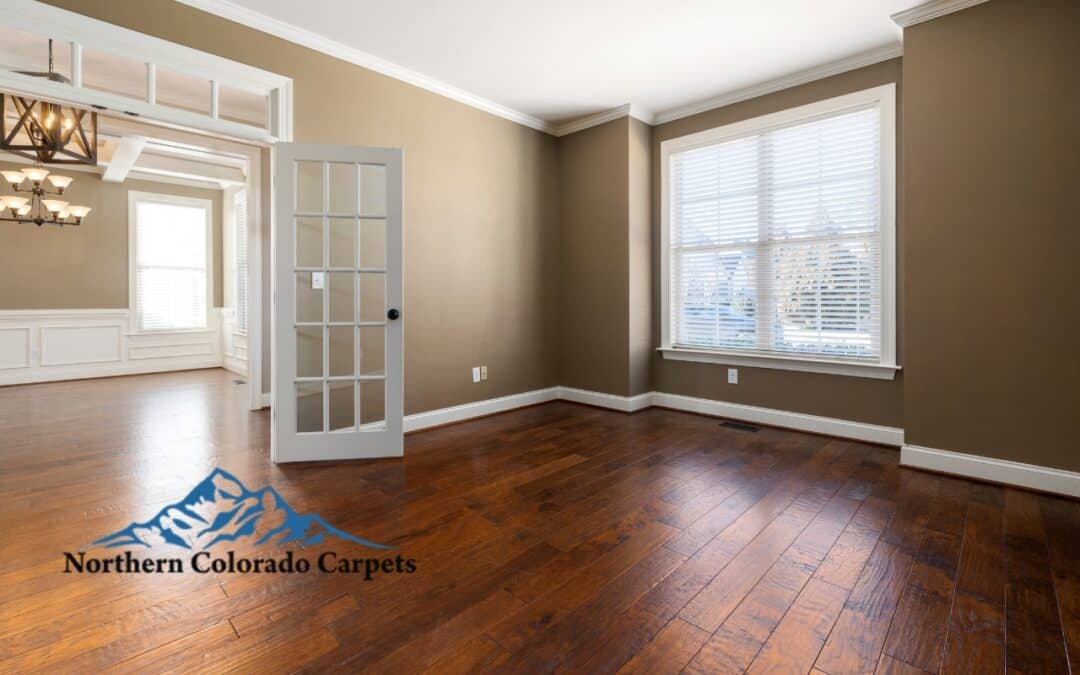
Luxury vinyl plank (LVP) is popular because it looks like hardwood flooring yet handles spills, snowmelt, and pets with ease. But not all LVP is the same. This guide explains wear layers, core types, textures, and room-by-room picks—so your floor remodel lasts and looks great. As a Fort Collins flooring contractor, Northern Colorado Carpets helps homeowners from Cheyenne to Denver and Estes Park to Greeley compare samples in real light and choose smart transitions to existing hardwood flooring.
TL;DR
- Wear layer = durability; a thicker layer generally resists scratches longer.
- SPC vs. WPC cores: SPC = denser/stabler; WPC = softer/warmer underfoot.
- Choose textures/embossing that match your home’s style and existing hardwood flooring.
- Kitchens, basements, and rentals have different needs—build your assembly accordingly.
Wear Layers Explained: What Thickness Means for Durability
Think of the wear layer as the clear shield that protects your LVP’s print film. Thicker wear layers (measured in mils) offer better scratch and scuff resistance—useful for active households, big dogs, and entry areas where snow, sand, and grit can challenge hardwood flooring alternatives. For most Northern Colorado homes, 12–20 mil is a solid residential choice; heavy-traffic homes and light-commercial spaces often benefit from 20–28 mil. Beyond thickness, pay attention to the finish: ceramic bead and polyurethane blends can boost abrasion resistance and maintain a low-sheen, hardwood flooring–like appearance.
Also consider edge details. Painted micro-bevels help planks read like real hardwood flooring while hiding tiny height differences. If your floor remodel connects LVP to existing hardwood flooring, a consistent sheen and bevel size help the two materials live side by side. Finally, warranty terms tell you where a product is designed to perform; a reputable flooring contractor will translate the fine print, confirm chair-pad requirements, and recommend felt glides so your new surface looks like hardwood flooring for years.
Want side-by-side comparisons? Visit our Fort Collins showroom to test wear layers against real-world scuffs—and see matches for your hardwood flooring.
Core Types (SPC vs. WPC): Comfort, Stability, and Sound Differences
LVP cores come in two main families: SPC (stone-polymer core) and WPC (wood-polymer core). SPC is denser and dimensionally stable, which helps with temperature swings common along the Front Range. It’s great for sunrooms, south-facing sliders, and basements that need firm, flat support. The trade-off is feel—SPC can be slightly harder underfoot than hardwood flooring. WPC, on the other hand, offers a more cushioned step and better sound absorption, which families often prefer in bedrooms and living rooms. WPC can feel closer to hardwood flooring with a softer step and warmer vibe.
Your subfloor matters: over concrete slabs, both cores usually float, often with an attached pad. A knowledgeable flooring contractor will pair the core with the right underlayment and confirm vapor control so your floor remodel stays quiet and stable. If you’re blending LVP with hardwood flooring, we’ll plan transitions and heights: SPC’s thin, rigid profile can meet tile cleanly, while WPC can help bridge minor subfloor variation. Either way, core choice should align with comfort, acoustics, sunlight exposure, and how closely you want the feel of hardwood flooring.
Not sure which core fits your space? Schedule a free in-home consult, and we’ll test sound and height next to your hardwood flooring and tile.
Texture & Style Options: Wood Looks, Stone Looks, and Realistic Embossing
Today’s LVP styling is impressively varied. If you love hardwood flooring, look for registered embossing (EIR) where the grain you see matches the texture you feel. Wire-brushed oaks, tight-grained maples, and rustic hickories all appear in modern palettes—from cool taupes to warm naturals that pair with existing hardwood flooring. Wider planks (7–9 inches) with long board visuals feel upscale and reduce pattern repeat. For a quieter, Scandinavian look, choose low-contrast prints that mimic light hardwood flooring; for farmhouse energy, pick knots and character.
Stone looks are equally strong: slate, marble, and travertine visuals let you echo mudroom or bath tile without cold surfaces. Sheen is key—matte reads most like site-finished hardwood flooring. Bevel style also shapes realism: micro-bevels feel like modern planks, while square edges create a more continuous surface that’s easy to clean. Your flooring contractor can stage multiple boards to show repetition frequency, then help you coordinate trim, treads, and thresholds so your floor remodel transitions gracefully to genuine hardwood flooring in nearby rooms.
Room-by-Room Recommendations: Kitchens, Basements, Mudrooms, and Rentals
Kitchens & Great Rooms: Choose a durable wear layer (20 mil is common) with a matte finish and EIR texture to mirror hardwood flooring. SPC handles sunlight and appliance zones well; add quality felt pads and a runner near sinks. If you’re keeping hardwood flooring in dining or hallways, we’ll color-match tones for a cohesive look.
Basements & Slabs: Prioritize moisture strategy—vapor barrier, flatness, and a core that resists temperature swings. SPC often wins here. A seasoned flooring contractor will check relative humidity and plan transitions to stairs or lower-level hardwood flooring caps so your floor remodel feels seamless.
Mudrooms & Entries: Choose slip-resistant textures and darker tones that camouflage grit. Thicker wear layers plus proper mats protect both LVP and adjacent hardwood flooring.
Bedrooms & Rentals: Comfort and sound matter. WPC or thicker attached pads dampen noise and mimic the warmth of hardwood flooring underfoot. For rentals, select forgiving colors, durable finishes, and click systems that allow selective plank replacement—protecting your budget and reducing downtime.
Across all spaces, plan expansion gaps, door clearances, and transitions. That’s where a local flooring contractor earns their keep—measuring precisely and ensuring your floor remodel connects LVP, tile, and hardwood flooring without trip points.
How to Pick LVP That Matches Your Budget, Lifestyle, and Timeline
Start with your rooms, pets, and sun exposure—then choose a wear layer, core, and texture that complement nearby hardwood flooring. Bring samples home, view them morning and night, and walk on large boards at our showroom for a true read. When you’re ready, our Fort Collins flooring contractor team will finalize subfloor prep, moisture layers, and transitions so your floor remodel installs cleanly and performs year-round.
Contact us or schedule a free in-home estimate. Northern Colorado Carpets—family-owned since 1976—pairs beautiful LVP with expertly installed hardwood flooring, tile, laminate, and carpet across Northern Colorado.

Recent Comments